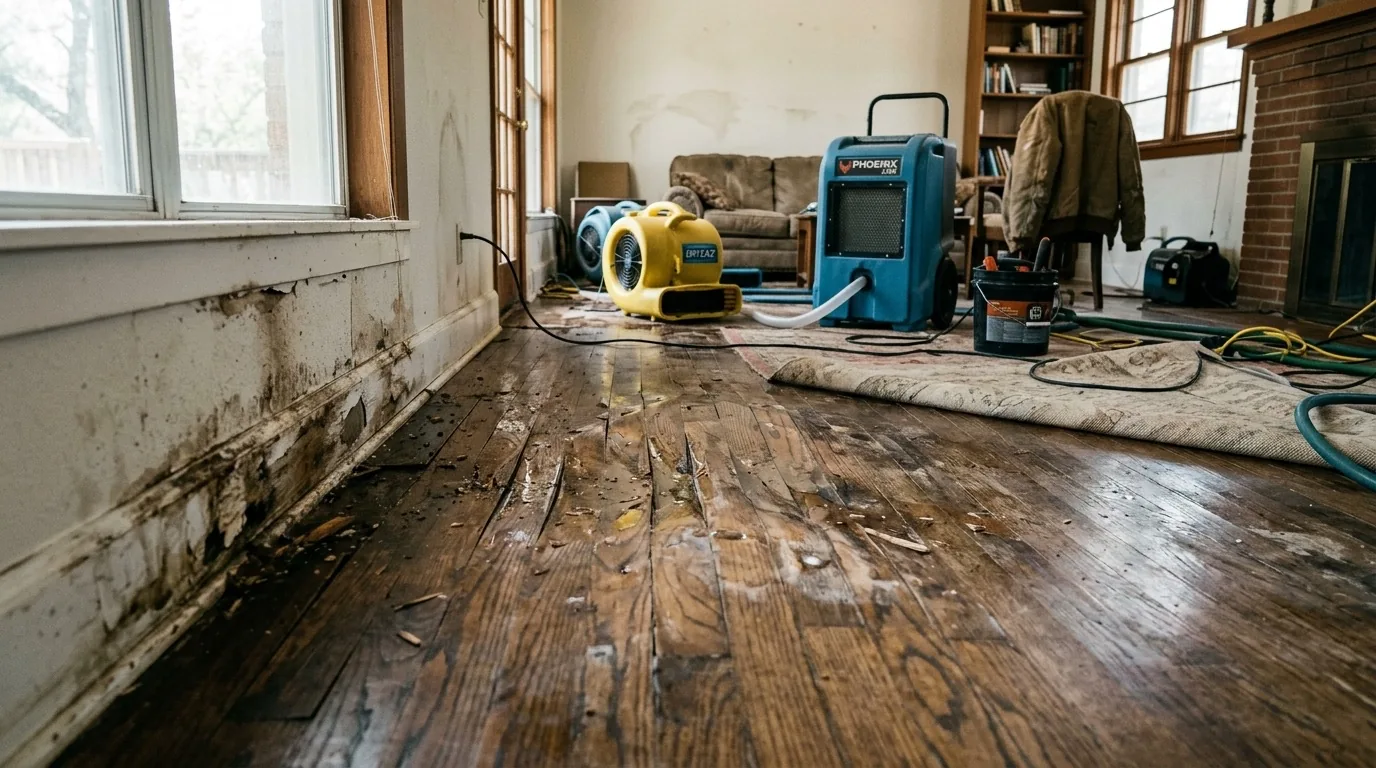
Water damage mold removal in Austin is crucial due to the region's climate. Whether it's a Hill Country flash flood forcing water through your crawl space or a burst pipe from a hard freeze, mold can appear within 24 hours of moisture exposure. If you've experienced water damage, the clock is ticking. For the menu of work we provide, this page outlines what occurs when water damage leads to mold.
Spotting Mold After Water Damage in Central Texas
Austin's climate is ideal for mold growth. Humidity frequently exceeds 70% in spring and fall. When floodwater or plumbing issues add moisture, mold can form on drywall, insulation, wood, and subfloor in 24 to 72 hours. This is not extreme, it's the standard timeframe per the IICRC S520 Standard for Professional Mold Remediation.
You might detect a musty smell before seeing any signs. Dark spots on walls, discolored baseboards, and warped floors are early indicators. If left untreated, mold can spread through wall cavities and insulation, remaining hidden.
Common Water Damage Causes in This Region
Central Texas experiences specific moisture events that spur mold growth.
Hill Country flash flooding channels massive runoff when storms hit upstream. Homes along the Guadalupe River corridor, Brushy Creek, and the San Gabriel River basin in Williamson County often face floodwater logging slab, crawl spaces, and garages.
Freeze-related pipe bursts affected many homes in Austin during the February 2021 freeze. Supply lines, especially in uninsulated attics and exterior walls, are at risk. If these fail, water can soak insulation, cascade behind walls, and pool on subfloors unseen. More about growth above the insulation line is on our attic page.
Roof leaks and storm damage from hail breaching roof decking allows water into attic sheathing and top-floor walls, particularly during Austin's wet springs. Ceiling stains may be the first sign for homeowners, but mold often establishes before it's visible.
Appliance and plumbing failures such as slow leaks under sinks or faulty washer hoses create persistent low-level moisture feeding mold over weeks. These are common in Travis County homes from the '70s and '80s.
From Dry-Out to Remediation: IICRC S500 and S520
Drying a structure and mold remediation are distinct processes with separate standards.
IICRC S500 addresses professional water damage restoration: water extraction, air mover and dehumidifier setup, moisture monitoring, and documenting the drying process. This standard helps return materials to safe moisture levels before enclosing walls.
IICRC S520 covers professional mold remediation, requiring containment, air filtration, removal, and advanced cleaning protocols.
The transition between these phases is critical. A home improperly dried, or sitting too long before dry-out, often requires remediation even after water disappears. We step in post-dry-out for a visual moisture assessment, identify affected materials, and outline our see the full step-by-step protocol before initiating containment.
If your insurance claim or real estate deal demands a written remediation protocol or verification, we partner with licensed Mold Assessment Consultants, in line with Texas Occupations Code Chapter 1958.
Where Mold Grows After Water Exposure
Water follows the path of least resistance. After plumbing failure or flood, it infiltrates:
- Wall cavities: Drywall acts like a sponge. Its paper and gypsum, plus wood studs, support mold.
- Subfloor and joists: Floods in crawl spaces drench OSB and lumber. We also address fixing wet sub-floor framing.
- HVAC systems and ductwork: Flooded air handlers and ducts harbor mold, spreading it through your home when active.
- Insulation: Fiberglass batt and cellulose insulation retain moisture long after appearing dry, often needing removal.
- Cabinets and millwork: Particleboard cabinets absorb water and rarely dry without allowing mold.
Our Water Damage Mold Removal Process
- Intake and visual assessment: We assess the affected areas, noting growth, moisture levels, and structural issues before quoting.
- Containment setup: We isolate the area using poly sheeting and negative air pressure to prevent spore spread.
- Controlled demolition: We remove necessary affected materials but ensure no compromised material remains.
- HEPA vacuuming and treatment: We HEPA vacuum containment area surfaces, applying EPA-registered antimicrobials to structural and non-porous surfaces.
- Debris disposal: We seal and remove bagged material in compliance with Texas waste rules.
- Clearance documentation: We provide scope, photos, and documentation for your insurance. If verification is needed, we coordinate with an independent Consultant.
Water Damage Mold Removal Costs in Austin
Water damage mold removal costs vary depending on moisture reach, material removal needs, and involved HVAC components. According to Angi's cost guide, Austin homeowners spend $1,433 to $6,000+ with a $3,509 average. Per-square-foot prices range $10-$25.
Simple plumbing failures are cheaper. Floods or HVAC intrusion increase costs. We'll provide a clear estimate after the walkthrough, with no surprise charges.
Insurance depends on cause. Most Texas policies cover sudden water damage, such as a burst pipe, but not seepage or floods without separate policy. We document causes to support your claims.
Why Homeowners Trust Us Across Central Texas
Holding a TDLR Mold Remediation Contractor, our technicians carry IICRC AMRT certification. We adhere to the IICRC S520 standard on each project, never cutting corners.
Our team knows central Texas construction well. Whether it's Travis Heights pier-and-beam homes, Round Rock slabs, South Austin's older bungalows, or Leander's new builds, each has vulnerabilities we've encountered.
We respond within 24 hours, providing straight answers. If a project exceeds our scope, we'll inform you upfront.
Frequently Asked Questions
Do you do mold testing?
We don't handle mold sampling. Texas rules separate this from remediation. We do visual inspections and moisture assessments. For required protocols or verification, we partner with licensed Mold Assessment Consultants.
How quickly can mold start growing after water damage?
Mold begins colonizing in 24 to 72 hours under typical Texas conditions. High temperatures and humidity speed this up. Don't wait to see growth before calling, early action usually means smaller scope and cost.
Does homeowner's insurance cover mold after water damage?
Coverage depends on the cause. Texas policies generally cover sudden events like burst pipes or appliance failures, but exclude seepage and maintenance issues without flood coverage. Check your declarations page or agent. We document for your claim regardless of carrier.
How long does water damage mold removal take?
Projects range from one to three days for small areas. Larger events affecting multiple rooms or HVAC systems can take five to seven days. We provide timelines and updates, ensuring you're aware during work.
Are you licensed to do this work in Texas?
Yes, we hold a TDLR Mold Remediation Contractor (MRC). Texas licenses remediation and assessment separately. We refer formal assessments to licensed Mold Consultants.
What's the difference between drying out and mold remediation?
Drying, under the IICRC S500 standard, reduces building materials' moisture to safe levels. Mold remediation, per the IICRC S520, removes and treats mold-affected materials. Prompt, thorough attention to water damage might preclude remediation needs.
What should I do right now if I just had a water event?
Stop the water source if active. Document with photos and video. Open a claim with your insurer and call us at (512) 900-5395 for an assessment. Avoid running HVAC if water entered ductwork, and don't disturb moldy areas before assessment.
Ready to proceed? Call us at (512) 900-5395 or open a service ticket for a visual assessment within 24 hours. Removing removing the species linked to chronic leaks is part of our services; we'll guide you through the process.