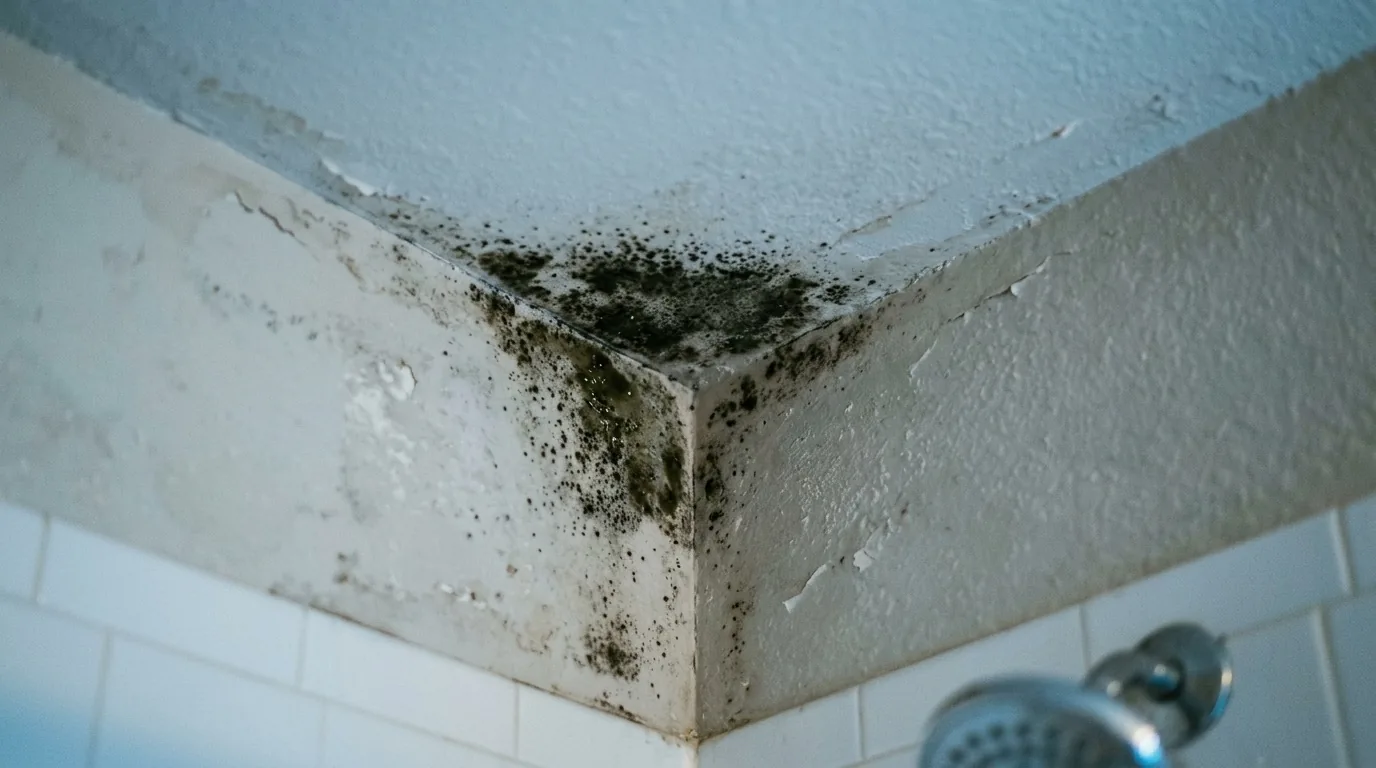
When you discover dark, slimy mold behind drywall or in a water-damaged ceiling, black mold removal in Austin is essential. This task involves proper containment, the demolition of affected materials, and thorough structural drying. We're a TDLR-licensed Mold Remediation Contractor serving Travis, Hays, Williamson, Bastrop, and Comal counties. For more details on the types of projects we handle, visit our see every type of project we take.
What "Black Mold" Really Means
"Toxic black mold" often refers to Stachybotrys chartarum, a species that thrives on materials like drywall paper and wood framing after water exposure. Some molds produce compounds that may irritate the respiratory system, causing symptoms such as coughing and headaches, according to CDC Mold Basics.
Remember, mold that appears dark isn't always Stachybotrys. Various mold types produce dark or greenish-black colonies, and species identification isn't possible through visual inspection alone. We partner with a licensed Mold Assessment Consultant (MAC) for accurate identification. Want to send a tech for a walkthrough first? Visit our page to understand what's covered in our visual inspection and damage assessment.
A visual mold inspection and moisture assessment can reveal the affected surface area, identify contaminated materials, and determine what's needed for removal and drying.
Where Black Mold Grows in Central Texas Homes
Central Texas offers an ideal environment for mold, with its heat, humidity, and susceptibility to rain, flooding, and plumbing failures. Black mold tends to emerge in areas with prolonged moisture exposure, not just brief dampness.
Behind drywall after water intrusion: A burst pipe or storm-related water can saturate wall cavities for days before detection. Places like Lady Bird Lake and the San Gabriel River often face hidden moisture issues. By the time you see surface discoloration, mold may have been growing for weeks. For cleanup after a leak or burst pipe, visit the page discussing the intersection of water damage and mold remediation.
In crawl spaces and below-grade areas: Older Austin homes and properties near the Brushy Creek water table often feature moisture-prone crawl spaces. For below-grade moisture cleanup, visit our dedicated page.
In bathrooms, laundry rooms, and HVAC closets: Persistent leaks and condensation around plumbing in unconditioned areas promote extensive mold growth.
Our Black Mold Removal Process
Every project follows IICRC S520 protocol. Here's our approach:
Visual inspection and moisture assessment: We identify visible mold and elevated moisture levels. A moisture meter helps us determine how far beneath visible growth the water has traveled, informing the demolition scope.
Negative-air containment: We encase the work area with polyethylene sheeting and use HEPA-filtered negative air machines. This prevents spores from spreading to uncontaminated parts of the building. It's vital for extensive black mold growth.
Drywall and insulation demolition: We remove contaminated drywall, insulation batts, and other porous materials, ensuring clearance margins per IICRC S520 standards. All debris is double-bagged and sealed before leaving containment. For a detailed view of the cleanup phase, see our more on the physical cleanup phase.
Structural drying: Wet yet structurally sound framing and subflooring are dried in place using air movers and dehumidifiers. We monitor moisture levels and only close up when readings fall within an acceptable range.
Antimicrobial treatment: An EPA-registered antimicrobial is applied to treated framing and concrete surfaces after demolition and before drying is complete.
Post-remediation coordination: We conduct a final visual review after completing the work. If a written clearance from an independent licensed Mold Assessment Consultant is necessary, we'll arrange a referral or coordinate with one. We partner with licensed MACs for any verification or written protocol needs post-remediation.
A Note on Species Identification
We don't claim to identify Stachybotrys chartarum by appearance. Dark molds can be Stachybotrys, Aspergillus, Cladosporium, Alternaria, or others. Accurate species identification requires a licensed MAC. If it's crucial for your case, we'll recommend a licensed consultant. Texas Occupations Code Chapter 1958 separates assessment from remediation, explained in the TDLR Mold Assessors and Remediators FAQ.
What Black Mold Removal Costs in Austin
The scope of black mold removal varies, affecting costs. In the Austin market, typical remediation costs range from $1,433 to $6,000 or more, averaging $3,509 with a per-square-foot rate of $10 to $25. Jobs involving drywall demolition and full containment often sit in the mid-to-upper range. We provide a written, itemized scope before work begins.
Why Property Owners Across Central Texas Trust Us
As a TDLR Mold Remediation Contractor with IICRC AMRT certification, we ensure full negative-air containment, proper demolition, and verified structural drying before close-up on every job. We respond within 24 hours and offer transparent insights on what a visual inspection can and can't reveal.
Serving Austin and its neighboring communities, including Round Rock, Cedar Park, Georgetown, Kyle, Buda, Pflugerville, San Marcos, New Braunfels, and regions across Travis, Williamson, Hays, Bastrop, Comal, and Bell counties.
Call (512) 900-5395 or start a conversation with us through our contact form.
Frequently Asked Questions
How much does black mold removal cost in Austin?
Most removals range from $1,433 to $6,000, depending on square footage and materials involved. A localized area costs less, while jobs requiring drywall removal, structural drying, and full containment cost more. You'll receive a written, itemized scope before work starts.
Do you perform mold sampling or species identification?
We don't conduct lab mold sampling. Texas separates remediation from assessment. We collaborate with independent licensed Mold Assessment Consultants for protocol or post-verification needs, and can arrange referrals.
Can you confirm if I have Stachybotrys (toxic black mold)?
No, we don't claim certainty. Dark mold can represent multiple species. Accurate identification requires a licensed MAC. We'll assess visible growth and moisture damage, detailing removal requirements. If necessary, we'll recommend a licensed MAC.
Does homeowner's insurance cover black mold removal in Texas?
Coverage depends on the cause. Texas policies typically cover mold remediation arising from a covered peril, like a burst pipe or storm intrusion. Mold from slow leaks is usually excluded. Review your policy and communicate with your insurer early.
What does the process look like, and how long does it take?
The process involves setting up negative-air containment, drywall and insulation removal, structural drying, antimicrobial application, and a final visual check. Most residential projects take two to four days; bigger jobs may take longer. A timeline is provided in the written scope.
Is the mold dangerous while we wait for remediation?
Significant growth requires quick action, especially if asthma, allergies, or a weakened immune system is a concern. We respond within 24 hours and can guide interim measures, such as reducing HVAC airflow in affected areas, until we're onsite.
Are you licensed to do this work in Texas?
Yes, we hold a TDLR Mold Remediation Contractor license and IICRC AMRT certification. Texas mandates separate licensing for mold assessment and remediation. We manage remediation, collaborating with licensed Mold Assessment Consultants when protocol or clearance is necessary.